.png)
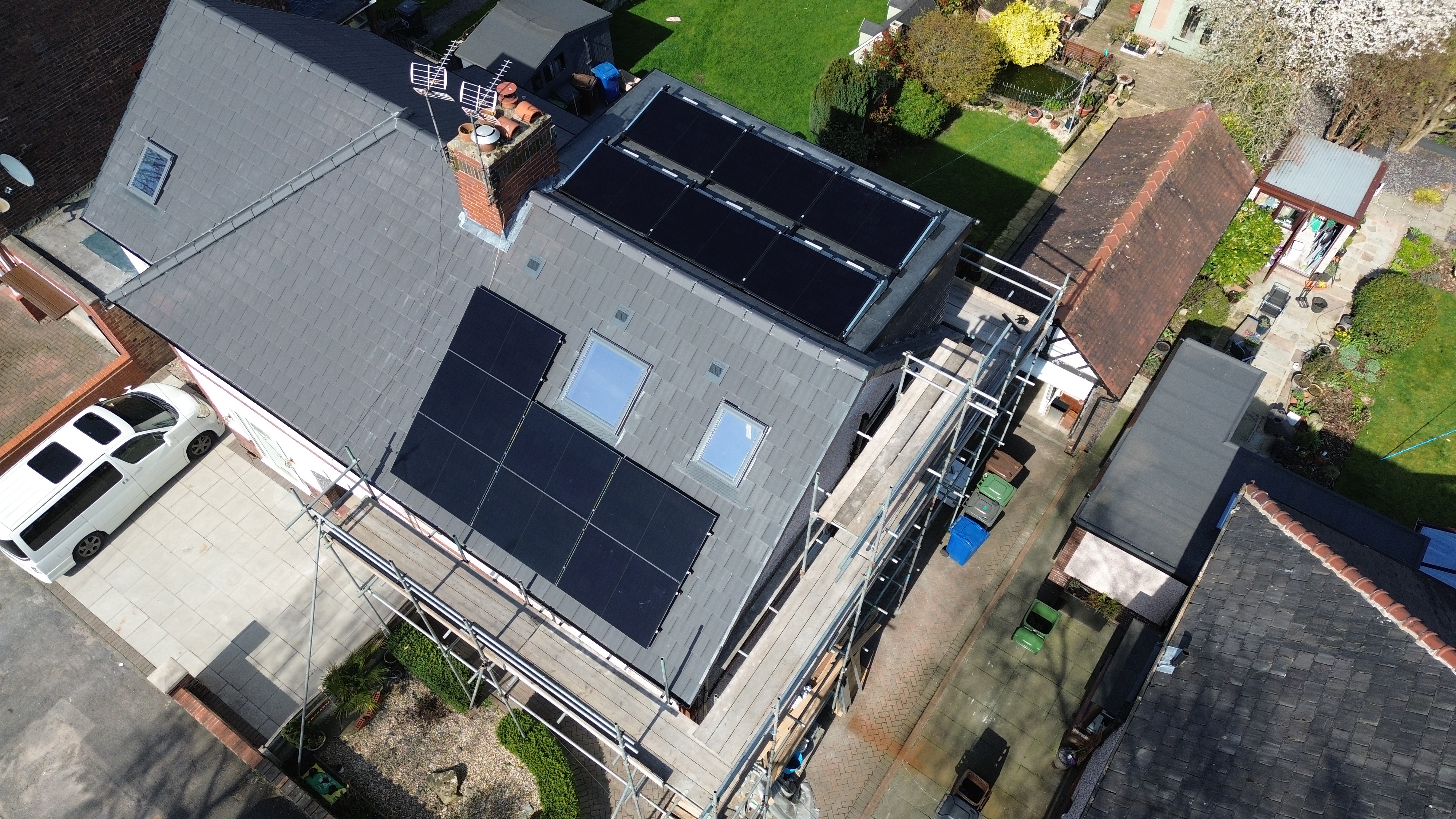
It's the most common thing we hear when we knock on a Greater Manchester door. People assume solar only works in the South, or in countries with proper summers. It's a totally reasonable thing to think — but it's not true.
Here's why: UK solar systems don't run on direct sunshine. They run on daylight. Even on a flat-grey overcast day in November, your panels are still producing — just at a reduced rate. The question isn't whether the sun's out. It's how many daylight hours you get across the year.
The UK's solar irradiance figures are published by PVGIS (the EU's solar database) and the Met Office. Here's how the North West compares to the rest of the country:
So yes — Greater Manchester gets less than the South Coast. But not much less. We're talking around 10-15% difference. That's the gap between a system paying back in 7 years and one paying back in 8. It's not the difference between solar working and solar being pointless.
A typical North West household installs a 4-5kWp solar system. At Greater Manchester irradiance levels, that gives you:
The average UK home uses 2,700-3,000 kWh of electricity per year. So a 4kWp system in Leigh, Wigan, or Bolton produces more than the household uses across the year — even before factoring in a battery.
Without a battery, you'll only directly use 30-40% of what your panels produce — because the sun shines during the day, but most household electricity gets used in the evening when people get home from work.
Add a battery, and that figure jumps to 70-80%. Combined with a tariff like Octopus Go (cheap rate overnight), you can charge the battery from the grid in winter when solar is thin, then run off battery during the day. The result for most of our North West customers: 70-90% off their electricity bill.
We've installed over 200 systems across Greater Manchester, Cheshire, Lancashire, and Merseyside. Real ballpark results from real properties:
None of these properties are in some sunshine utopia. They're standard Greater Manchester homes — pitched roofs, often with chimneys, often partially shaded. The numbers still work.
Solar panels produce around 25% of their peak output on a heavily overcast day. That's not great, but it's not zero. Across the year, the UK's mix of clear days, partial cloud, and overcast still adds up to a solid annual generation figure. The reason it works is consistency — solar panels run for a long time each day, even when output is reduced.
And when the sun does come out in April-September? You're producing more than you can use, charging the battery, and exporting the rest for SEG income.
One reason we focus on the North West for residential installs (and not the whole country): proximity matters. We can survey, install, and service jobs in our area much more efficiently than installers based in London or the Midlands. That means:
We're based in Leigh and we cover everything within ~70 miles. That includes all of Greater Manchester, most of Lancashire, parts of Cheshire and Merseyside.
Short answer: yes — and it has been for years. The "we're not sunny enough" objection was always overstated, but the case has got stronger every year as panels have got more efficient, batteries have got cheaper, and time-of-use tariffs have opened up new ways to save.
If you've been putting it off because you weren't sure it would work up here — it does. The only way to know what your specific roof would produce is to get a proper survey done.
Drop us a line. We'll come out, survey the roof properly, give you a real generation estimate based on PVGIS data for your specific location, and quote without any hard sell. We've done this 200+ times across the North West and we'll happily share examples from your area.
